Allegion's Commercial Family of Brands















Teachers often prop doors open to reduce classroom disruptions, but these convenience-based workarounds can create serious security risks. ALERRT research found that 69% of attacker entries occurred through unsecured doors, with 14% of those doors being propped open.
Walk down the hallway of a typical American K–12 school during a class period, and you will likely see a quiet, empty corridor lined with heavy, shut classroom doors. To an outside observer or a patrolling administrator, the building appears completely secured—each room is sealed off from the common areas. Yet, a closer inspection of the door frames may reveal a different reality: a thin, flexible magnetic strip placed directly over the metal strike plate, preventing the latch bolt from catching. The door looks shut, but with a gentle push or pull, it glides open without resistance.
This scene perfectly captures the "convenience trap." In schools, rigorous access-control protocols naturally collide with the reality of daily instruction. When security policies create operational friction, like forcing a teacher to stop a lecture every few minutes to walk across the room and let in a student returning from the restroom, the nurse’s office or their locker, behaviors will naturally adapt to the path of least resistance. They do not prop doors out of disregard for safety, but out of a desire to maximize instructional time and minimize classroom disruptions. To balance safety with workflow, well-meaning staff sometimes turn to magnetic strips and door stops as "harmless" compromises.
However, these adaptations carry hidden, potentially dangerous consequences. According to new research from Texas State University and the ALERRT Center (The Role of Locked Doors and Access Control in School-Based Active Shooter Events: An Analysis of U.S. K–12 Active Shooter Incidents, 2000–2025), aftermarket door props can create an ambiguous security state, introduce vulnerabilities during an active threat, and degrade locking mechanisms over time. The research showed that 69 percent of attackers' entries occurred through unsecured doors, and 14 percent of the unsecured doors were propped open. School safety cannot depend on improvised workarounds; it requires understanding the friction that drives teacher's behavior and replacing temporary hacks with reliable, friction-free, interior-locking hardware and research-backed policies.
To address the problem of propped doors, school leaders must first understand the operational pressure driving the behavior. A classroom is rarely a static environment; it is a dynamic hub of constant movement.
Throughout a single class period, a teacher might manage multiple students leaving for restroom breaks, returning from the nurse’s office, retrieving forgotten materials from lockers, or running small errands. Add in co-teachers or support staff moving between classrooms, and the constant need to grant entry turns a locked door into a barrier to instructional momentum.
Faced with these hurdles, teachers do not bypass safety protocols out of negligence or disregard for safety. Rather, they invent these workarounds seeking an effective, uninterrupted learning environment. In the teacher's mind, an aftermarket hack like a magnetic strip over the strike plate represents a compromise: it allows students to enter smoothly during regular instruction and gives the appearance of a secured door.
This disconnect between perception and reality creates what the ALERRT Center report identifies as an ambiguous security state. On the surface, a classroom door outfitted with a magnetic strip offers visual compliance: to a hall monitor, a passing administrator or an active threat scanning the corridor, the door sits flush in its frame, looking firmly closed and latched. Functionally, however, it remains unsecured.
This visual facade produces a profound, dangerous false sense of security for both the classroom occupants and school leadership. Students and staff inside the room carry on under the impression that they are shielded behind a physical barrier, but their first line of defense requires manual intervention to function. For administrative and security personnel conducting routine walk-throughs, the strip obscures non-compliance; a visual check confirms the door is shut, while the underlying vulnerability remains completely invisible unless each handle is physically tested.
The use of magnetic strips introduces a core flaw, which assumes that a teacher will be able to transition the door to a locked state if danger arises. Yet, decades of stress-response research show that extreme, life-threatening events induce severe physiological reactions, including auditory exclusion, tunnel vision and the deterioration of fine motor skills. In an emergency, expecting an educator to sprint toward the door, open it and use precise finger dexterity to peel a thin, flush-mounted strip of magnet off a metal frame introduces critical, unnecessary points of failure when every fraction of a second counts.
The effects of relying on security workarounds was demonstrated during the 2019 shooting at STEM School Highlands Ranch in Colorado. In that incident, magnetic strips were installed on classroom door frames to keep doors unlatched for convenient daily traffic. However, during the attack, that intended function was entirely inverted. One of the perpetrators—a current student intimately familiar with the school’s daily routines and door security mechanisms—reached up, pulled the magnetic strip from the frame, and allowed the door to shut. The latch engaged, locking the door from the outside.
The removal of the magnetic strip was weaponized first by the attacker to establish complete tactical control over the room and delay hallway intervention. It was only after students and staff confronted, disarmed and forced the perpetrator out into the hallway that the door’s locked status finally worked in favor of the occupants—keeping the attacker from re-entering once he was expelled. The practice of keeping classroom doors locked meant to protect students was first exploited to endanger them and then served its intended purpose of keeping attackers out.
The STEM School case highlights a critical vulnerability unique to K–12 environments, particularly secondary schools: the insider threat. As the ALERRT Center research emphasizes, active shooters in middle and high school settings are overwhelmingly current or former students who have daily, prolonged exposure to the school’s physical security layout and emergency procedures. When security measures rely on concealment, "secret" workarounds or specialized physical knowledge, such as an improvised magnet over a strike plate, they are not invisible to the student body. Students observe these practices every single day, understand how they work, and, as history has shown, can exploit them to gain an upper hand during an attack.
Creating Friction-Free Security: Practical Alternatives
Eliminating the use of aftermarket door props cannot be achieved through strict mandates alone. School leaders must work to address the practical friction that leads teachers to use them in the first place. When access control solutions are intuitive, built-in and supportive of regular classroom flow, safety becomes the natural default rather than a daily checklist. To build a more secure and practical learning environment, administrators can prioritize four key strategies:
1. Building a Culture of Safety and Compliance
Based on the empirical data from the TSU ALERRT Center research reviewing K-12 active shooter events since 2000, 69 percent of entries attackers made were through unsecured doors. Making sure all doors in the school are secured or could be secured quickly can significantly improve student safety. Since 2023, seven states have passed legislation requiring classroom doors to be locked during instructional periods.
Districts must pivot to a supportive operational culture. Threatening reprimands for propped doors rarely works when the underlying friction remains unaddressed. Leaders must work alongside educators to identify potential operational pain points, such as scheduled transition periods or key logistics, and resolve them, so the policies are more readily embraced and practiced.
2. Audit Existing Hardware and Remove Unauthorized Props
Districts must conduct comprehensive, room-by-room hardware audits. First, facility teams should identify legacy locksets that require teachers to step into the corridor to lock up with a key—these represent priority targets for upgrades. Second, audits should actively inspect strike plates and thresholds to ensure that all unauthorized aftermarket devices—including magnetic strips, wedges, kick-down stops—are identified, removed and prohibited from school grounds. Finally, latch bolts and springs should be tested to ensure no damage has occurred with the use of magnetic strips.
3. Upgrade to Interior-Engaging Hardware (The ALERRT Center Research Recommendation)
A direct recommendation outlined in the Department of Justice Critical Incident Review, Robb Elementary and the ALERRT Center reports is replacing outdated hardware with locks that can be secured from inside the room without auxiliary devices. Installing commercial classroom-security locksets, such as those featuring an interior thumb-turn or push-button allows staff to quickly secure a room without exposing themselves to hallway threats or dealing with aftermarket magnets. Notably, the ALERRT Center’s dataset revealed that many school facilities already possess locksets capable of interior locking, but staff either lacked the proper keys or had never been trained on how to use their existing hardware.
4. Implement Friction-Free Access Control
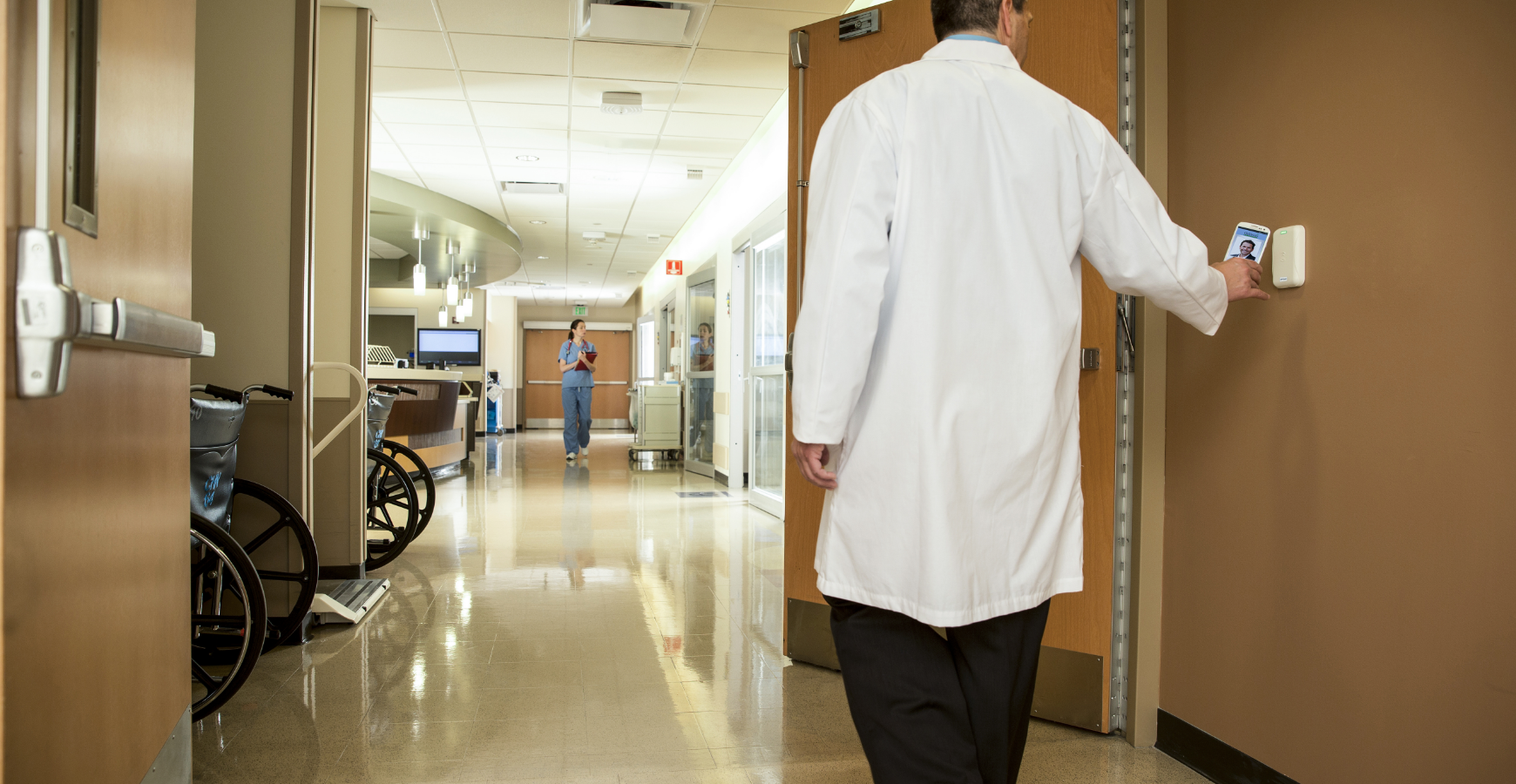
Modernizing school doors with electronic access control significantly reduces the burden of manual key management. Installing badge-in proximity readers or smart, electrified locksets allows students and authorized staff to re-enter locked classrooms with a simple card tap, wristband or fob. This eliminates the need for teachers to pause instruction to open doors manually. These systems maintain a closed, latched and secured baseline while preserving natural flow for daily school traffic.
Another key benefit of electronic access control is that it allows a door to be locked down immediately without the need for staff members to approach the door. At Robb Elementary, the school had initiated lockdown more than a minute before the perpetrator entered through the exterior doors. Even though a teacher had shut the classroom door, it remained unlocked. Automatic lockdown with electronic access control helps reduce stress or guesswork in those situations.
When security measures cause continuous disruption to both teaching and learning, human nature will try to find a path toward operational efficiency. But as research data and real-world incidents have shown, these well-intentioned shortcuts introduce a level of risk: creating an uncertainty around doors' locked status, degrading locking hardware over time and offering dangerous advantages to potential threats.
School safety cannot rely on makeshift hacks, nor can it solely depend on flawless human intervention during crisis. Protecting students and staff requires aligning security protocols with human behavior rather than working against it. By building a culture of safety and compliance, districts can build an environment where security is the default baseline. When doors are designed to stay securely locked without interrupting the rhythm of education, teachers can focus on their mission: teaching and nurturing their students.

Explore our extensive Resources hub to find a complete collection of tools and information to assist and guide you along your journey.
Contact us today to talk about your project needs.
Ⓒ 2025 Allegion all rights reserved