Allegion's Commercial Family of Brands














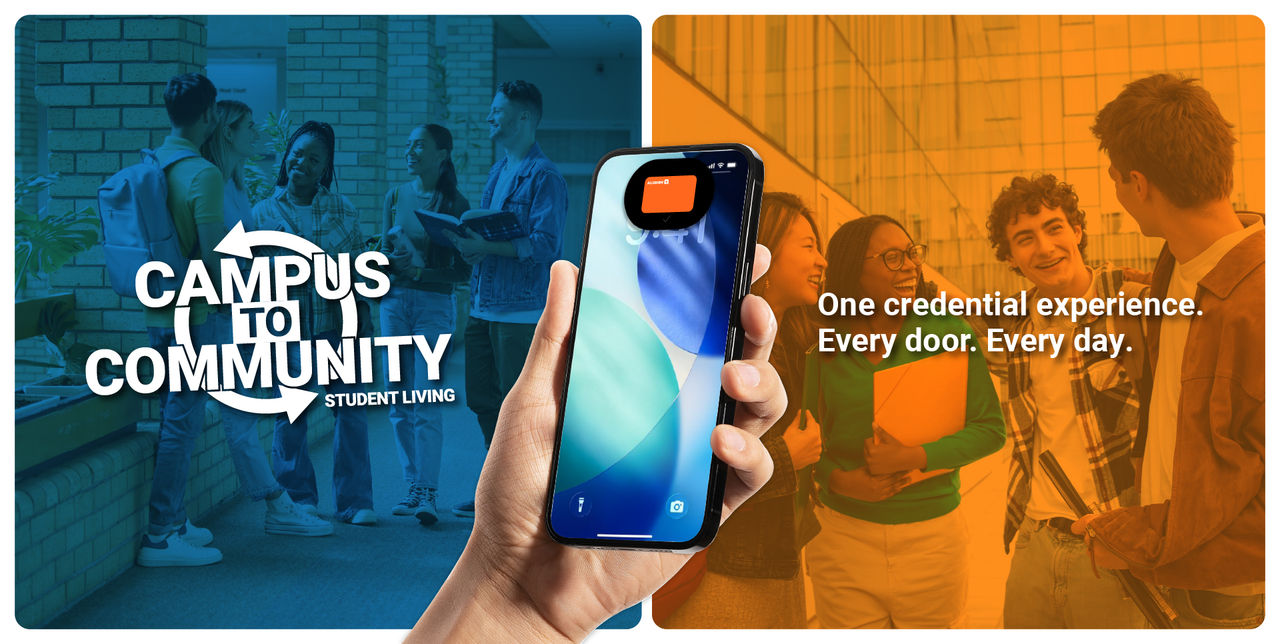
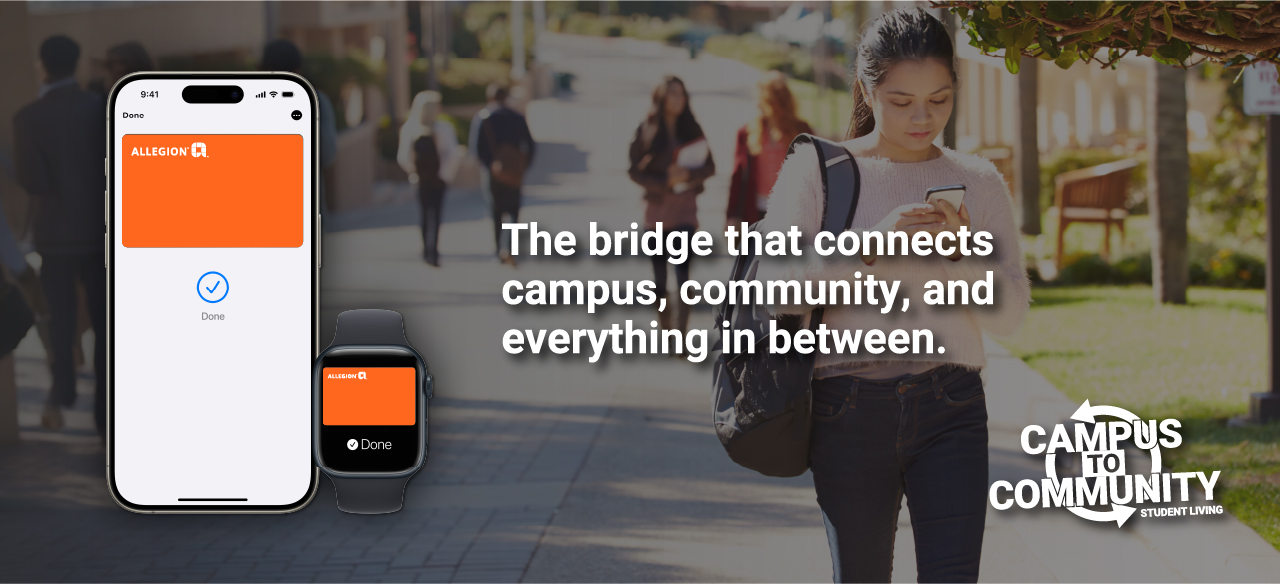
For years, off‑campus student housing has operated in a world of contradictions. Properties are expected to deliver a modern, mobile‑first living experience — yet they’re often built on fragmented systems, manual processes, and turnover cycles that strain even the most seasoned teams. Students move fluidly between campus and community, but their access experience rarely follows them. Parents expect safety and reliability, but operators are juggling disconnected tools that make consistency difficult.
The industry is shifting. Universities are rethinking their role in off‑campus partnerships. Students are demanding seamlessness. Operators are searching for ways to reduce friction, risk, and operational chaos. And property technology solutions (or proptechs), when implemented well, are becoming the bridge that connects all of it.
This guide is designed to help you understand the fundamentals of Campus‑to‑Community Student Living: what it means, why it matters, and how to evaluate the systems and partners that can help you get there.
1. Understand the Realities That Make Student Housing Different
Before you can modernize, you must acknowledge the operational environment you’re working in. Off-campus student housing is not multifamily with younger residents — it’s a category with its own pressures, rhythms, and expectations.
Turnover Isn’t Seasonal — It’s a Sprint
In traditional multifamily, turnover is a steady drumbeat. In student housing, it’s a tidal wave. Thousands of residents move out and move in within days. Every inefficiency is amplified. Every manual process becomes a bottleneck. Every system that doesn’t integrate becomes a liability.
Fragmentation Is the Norm, Not the Exception
Most properties are running:
This fragmentation creates friction for staff and confusion for students.
Students Live in Two Worlds: Campus and Community
They expect:
But most offcampus properties can’t deliver that because their systems aren’t aligned with campus infrastructure.
Parents Are Paying Attention
Safety, reliability, and transparency are no longer “nice to have.” They’re differentiators. They influence leasing decisions. They shape reputation. And they depend heavily on the strength of your access ecosystem.
Understanding these realities is the first step toward building a connected, resilient student living experience.

2. Start With the Experience You Want to Deliver—Not the Technology
When operators begin exploring modernization or proptechs, the instinct is often to start with features, hardware, integrations, or vendor comparisons. But in student housing, especially off campus, that approach almost always leads to piecemeal decisions, mismatched systems, and solutions that don’t actually solve the problems that matter most.
A better starting point is deceptively simple: Define the experience you want to deliver.
This is the foundation of any successful Campus-to-Community Student Living strategy. Technology is only meaningful when it supports a clear vision of how students, staff, and parents should move through your property, interact with your systems, and feel during the moments that matter most — move-in, daily access, lockouts, emergencies, and turnover.
When you begin with the experience, you shift the conversation from “What tools should we buy?” to “What kind of environment are we trying to create?” That shift is where clarity emerges.
What should life feel like for residents?
Residents are the primary users of your access ecosystem, and their expectations are shaped by every other part of their digital lives. They’re used to tapping, scanning, unlocking, and accessing everything from their phones — instantly.
A modern student living experience should feel:
When students feel confident and in control, your team feels the relief immediately.
What should life feel like for staff?
Behind every smooth student experience is a staff experience that isn’t drowning in manual work. Off‑campus teams are already stretched thin especially during summer turnover, and the right access ecosystem should remove friction, not add to it.
A staff‑centered experience should include:
When staff aren’t toggling between systems or troubleshooting avoidable issues, they can focus on resident support, safety, and community building.
What should life feel like for parents?
Parents may not interact with your systems directly, but they can influence leasing decisions, reputation, and trust. Their expectations are simple but powerful.
A parent‑assured experience should convey:
When parents feel reassured, they become advocates — not skeptics.
Why should you care about this?
Starting with the experience creates a north star that guides every decision that follows:
It prevents you from investing in technology that looks impressive on paper but fails to deliver meaningful impact in the real world of student housing — a world defined by high turnover, fragmented systems, and constant movement between campus and community.
When you define the experience first, the technology becomes the enabler — not the driver. And that’s the difference between a property that simply “has proptech” and one that delivers a truly connected campus‑to‑community student living experience.
3. Identify the Gaps Holding You Back
Once you’ve defined the experience you want to deliver, the next step is to take an honest look at the systems, processes, and operational habits that are preventing you from getting there. In off‑campus student housing, these gaps are rarely subtle — they show up in daily frustrations, turnover chaos, and the constant feeling that your technology is working against you instead of for you.
Many of these challenges stem from the way student housing has evolved over time. Properties have layered new tools on top of old ones, adopted point solutions to solve immediate problems, and inherited hardware or software from previous owners. The result is a patchwork of systems that don’t communicate, don’t scale, and don’t support the connected campus‑to‑community experience students now expect.
Multiple Credentials
One of the most common gaps is the reliance on multiple credentials across a single property — fobs for units, PINs for amenities, cards for exterior doors, temporary codes for vendors. Every additional credential introduces friction and increases the likelihood of lockouts, confusion, and operational errors. It also creates an inconsistent experience that feels outdated to students who are accustomed to mobile‑first access everywhere else in their lives.
Manual Provisioning
Another major gap is manual provisioning, especially during move in. When staff are creating or updating credentials one by one (and new temporary staff have to be hired and trained), the process becomes slow, error-prone, and exhausting. During summer turnover, when hundreds or thousands of residents are arriving within a compressed window, these inefficiencies compound into long lines, frustrated students, and overwhelmed teams.
Lack of Integration
A third gap is the lack of integration between the property management system (PMS) and access control. Without a unified source of truth for resident identity, staff are forced to duplicate work, reconcile mismatched data, and manually correct access permissions. This not only wastes time but also increases risk, as outdated or incorrect access rights can remain active longer than intended.
Hardware inconsistencies add another layer of complexity. When different buildings or even different floors use different lock types, credential technologies, or reader standards, maintenance becomes unpredictable and troubleshooting becomes guesswork. This problem becomes compounded when the property is sold over the years and one-off aftermarket upgrades lead to more mismatched infrastructure. Because of this, staff spend more time diagnosing issues and less time supporting residents.
Vender Sprawl
And then there’s vendor sprawl. Over time, properties accumulate a mix of providers for access control, amenities, parking, visitor management, and more. Each vendor has its own support model, its own interface, and its own limitations. Without a unified ecosystem, operators are left stitching together solutions that were never designed to work as one.
These gaps matter because they introduce real consequences:
A Campus-to-Community Student Lliving Strategy is ultimately about closing these gaps — not with more tools, but with a cohesive, integrated access ecosystem that supports the experience you want to deliver. When your systems work together, your operations become more predictable, your staff more effective, and your residents more confident in the place they call home.
4. Build a Connected Access Foundation
A true campus to community experience rests on three core pillars.
1. Mobile Credentials
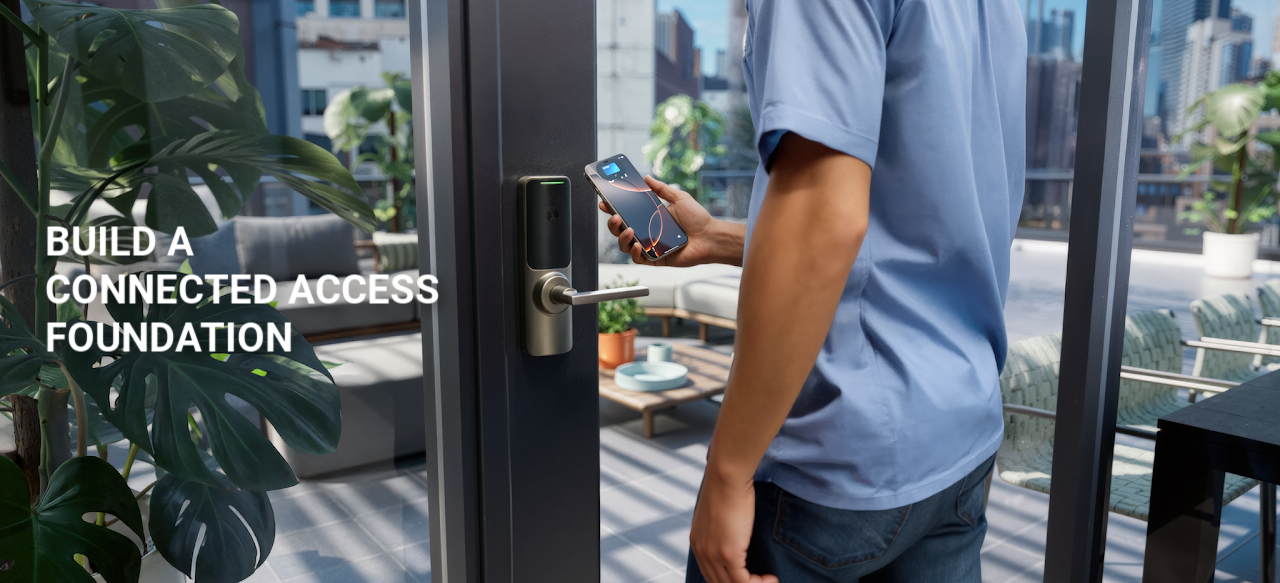
Mobile access isn’t a trend — it’s the new baseline. For student housing, it solves real operational pain:
2. Open Architecture
Your access system must integrate with:
Closed ecosystems limit your ability to scale and adapt.
3. Trusted, Durable Hardware
Student housing is hightraffic, highturnover, and highstress on hardware. You need:
These pillars create the foundation for a seamless, scalable experience. For more information on designing student housing spaces that work for your team and residents, check out the Campus-to-Community Student Living Design Guide.
5. Choose Partners Who Understand Student Housing
Selecting the right technology partner is one of the most consequential decisions an operator can make — and not all proptech providers are equipped for the unique pressures of student housing. This environment moves faster, turns over harder, and demands tighter coordination than traditional multifamily. Your partners must understand that rhythm. The strongest providers bring deep integrations with student‑focused PMS platforms, familiarity with campus access systems, and hardware built to withstand the constant wear of high‑traffic student environments. They also offer support models aligned to the academic calendar, clear roadmaps for mobile‑first experiences, and open architecture that allows your ecosystem to evolve without locking you into a single vendor’s limitations.
Just as important as what to look for is what to avoid. Closed ecosystems, limited integration capabilities, and one‑size‑fits‑all solutions often create more fragmentation, not less. Providers who don’t understand turnover cycles or who can’t support your team during peak demand will quickly become operational liabilities. Slow or inconsistent support can turn minor issues into major disruptions during the moments when reliability matters most. Ultimately, your technology partner should function as a long‑term strategic ally — one who understands the realities of student housing and is committed to helping you deliver a seamless campus‑to‑community experience year after year.
Prepare Your Team and Your Residents
Even the most thoughtfully designed access ecosystem will fall short if the people using it aren’t prepared to succeed. Technology only becomes transformative when staff and residents understand how to interact with it confidently and consistently. That’s why preparing your team, and your student community, is just as critical as selecting the right systems.
For staff, this means developing fluency with the tools that power your campus‑to‑community student living experience. Teams need to feel comfortable issuing and revoking mobile credentials, troubleshooting common access issues, and managing the integrations that keep your PMS, access control, and other systems aligned. They also need clear, repeatable turnover workflows so that peak‑season pressure becomes a predictable process rather than a scramble. Strong communication practices are essential too; when staff know how to explain changes and set expectations, they prevent confusion before it starts.
Residents, meanwhile, benefit from simple, well‑timed guidance. A quick introduction to mobile access, a clear explanation of what to expect during move‑in, and an easy way to request help can dramatically reduce lockouts, support tickets, and first‑week frustration. When residents understand how the system works, they trust it. And they rely on your team less for avoidable issues.
This is also where Allegion’s consultants play a meaningful role. Our teams can support onboarding, training, and change management, helping staff build confidence with new workflows and ensuring the transition feels smooth rather than disruptive. We can also assist with resident‑facing education, providing materials and best practices that make adoption easier for students. In other words, you’re not navigating this shift alone — you have caring experts who understand student housing and can guide your team through every step.
A connected experience only works when everyone is connected to the information they need. When staff and residents are aligned, trained, and supported, the technology becomes almost invisible, and the living experience becomes seamless.

6. Measure What Matters
Once your Campus-to-Community Student Living foundation is in place, track the impact.
Key Metrics
These metrics help you refine your system and demonstrate ROI to stakeholders.
Final Thought: The Future of Student Housing Is Connected
Campus‑to‑Community Student Living isn’t just a technology upgrade; it’s a strategic shift. It’s about creating a deeply connected experience that supports residents, empowers staff, and aligns with campus partners. It reduces ’s friction, risk, and operational chaos – all while enhancing security. And ultimately, it builds a foundation that can evolve with the expectations of the next generation of students..
If you’re ready to explore your options on how to bring a safer, more modern and connected experience to your off-campus student housing property, check out the Campus-to-Community Design Guide or reach out to our team of dedicated student housing experts here: http://www.lp.allegion.com/student-housing-contact.
To receive the latest on style and design trends, subscribe to our monthly Access Multifamily newsletter.

Explore our extensive Resources hub to find a complete collection of tools and information to assist and guide you along your journey.
Contact us today to talk about your project needs.
Ⓒ 2025 Allegion all rights reserved