Allegion's Commercial Family of Brands













In the current student housing landscape, resident expectations are rapidly evolving as tech-native students transition from on-campus residence halls to off-campus living. Having grown up with smartphones and experienced seamless tap-to-enter access on campus during their freshman year, students increasingly expect that same friction-free digital experience in off-campus housing, rather than reverting to physical keys, fobs, or "just one more" app.
In this episode of Solving for Multifamily, host Robert Gaulden talks with Tyler Webb, Mobile Ambassador at Allegion, about the concept of "Campus-to-Community" and the rapid adoption of wallet-based mobile credentials across off-campus student housing.
Drawing on his background leading early Apple Wallet student ID rollouts in higher education, Webb breaks down how in-wallet credentials bridge the gap between resident convenience and operator efficiency. He discusses how mobile credentials eliminate move-in bottlenecks and late-night lockout costs, clarifies the technical distinction between university credentials and off-campus resident keys, and explains how property owners can future-proof their assets while improving net operating income.
Read the Q&A below:
Robert Gaulden: How do you become a mobile ambassador, Tyler?
Tyler Webb: I think you become a mobile ambassador by getting hired into a role that's 100 percent dedicated to mobile credential growth. But I think also a little bit of background in the industry and some experience with mobile probably helps that a little bit.
Gaulden: Maybe a little bit about your role, and then let's jump into what campus-to-community really means for you?
Webb: I have been around mobile credential growth since its inception. I was at the University of Oklahoma, somehow found myself running their card office, and we had a really great opportunity to be one of the first three schools to launch Student ID and Apple Wallet back in 2018. That was a wonderful project, and then I dedicated the next phase of my career to helping other universities go mobile. When this opportunity came to join Allegion and to start seeing mobile credential growth in other verticals, I jumped at it. One of my favorite areas is what we're here to talk about today: the campus to community living.
Gaulden: When you say campus to community, what are we talking about?
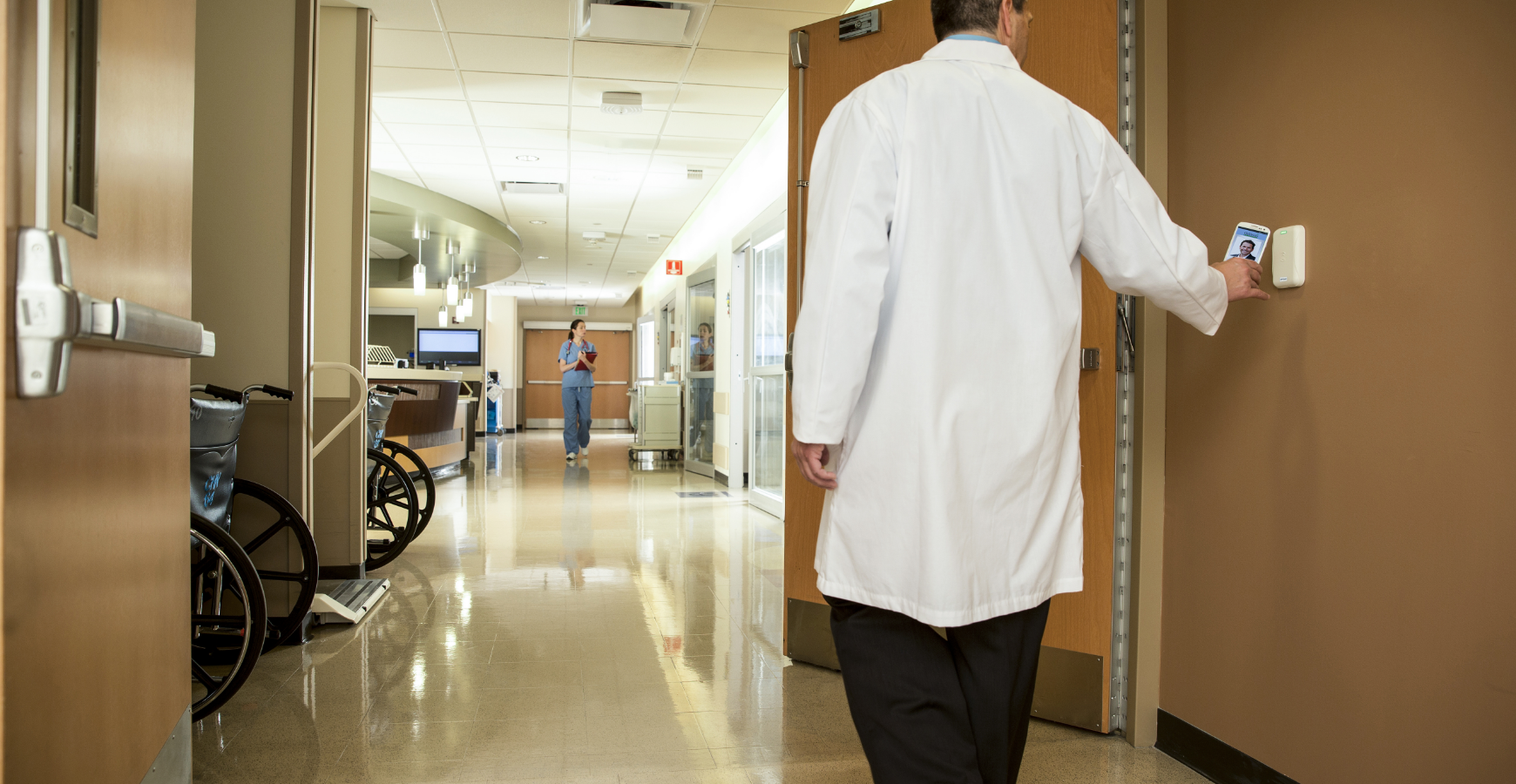
Webb: The growth of student ID and wallet has been great—there's probably north of 200 campuses that have launched student ID in wallet where the phone is used for vending, dining, events, and attendance. Roughly 20 to 25 percent of students live on campus, usually their freshman year, and then almost 80 percent live off campus somewhere, with about 60 percent of that population living in purpose-built student accommodations. Their experience of being able to use their student ID and wallet on campus stops as soon as they cross that threshold of the campus boundary; then they have to go to a key, a fob, or a Bluetooth solution. These off-campus communities have the same issues: massive move-in and move-out days, lost fobs, and lockouts. Students would much rather just worry about their phone or watch and know they can get in and out of their place.
Gaulden: What additional things can you bring to the table when you start to talk about operational efficiency, especially if you move over to mobile adoption and in-wallet?
Webb: Massive move-in and move-out days. The vast majority of the resident population moves in on a single day or a couple of days. Property managers have to bring in additional workers and temporary workforce. You have the bottleneck effect at the front office where they're physically getting their credential, whether it's a fob or a key. When students leave, you have massive efforts to turn those properties, and a lot of that centers around recoring because you don't know if the resident made a copy of their key. That recoring on a semesterly or yearly basis adds up significantly. Also, with wallet credentials, even if an iPhone dies, Apple's power reserve allows access for up to eight hours post-battery dying.
Gaulden: Any insights from your travels and setting up these communities on the resident experience? Are they starting to demand this?
Webb: The population in college now hasn't been alive without a smartphone. We hear feedback from parents saying, "Our kid hasn't ever had a key to their place. We had electronic locks at our house, and they had it their freshman year." When I toured a property previously using a Bluetooth solution, I found many residents just left their front door unlocked because it was easier than having to pull up an app and authenticate. There is an expectation that what they've enjoyed on campus carries over to their next property, especially when paying a premium. About 91 percent of residents provision their credential prior to move-in, so when they arrive, they literally bypass the front office, go straight to their unit, and their phone works.
Gaulden: The credential I'm using on campus perhaps to gain access to labs or campus facilities is different than the credential that I'm using off campus. Is that correct?
Webb: Yes. There's a lot of confusion around credential and experience. The university treats that student ID as if it is your Social Security number and keeps it very secure. It's very rare they would open that up to a third-party entity without managing that property. What we're providing off campus is typically a different credential that still resides in wallet. On campus, everything is configured to seamlessly pull the student ID. Off campus, we configure the locks to pull the resident credential. The student provisions a credential twice, but from a user standpoint, you seamlessly go from campus to community and it just works.
Gaulden: If I was an operator, how do I get started? Where do I start?
Webb: You can start by reaching out to me. The hardware investment made today is future-proofing you for going mobile down the road. As more off-campus communities go online, universities that haven't launched student ID in wallet will adopt it faster when they see properties around campus have a better and more secure experience. And the other way around: students will start demanding this as they move off campus.
Gaulden: Tyler, if people wanted to reach out to you and connect with you, where can they find you?
Tyler Webb: You can find me on LinkedIn, or via email at tyler.webb@allegion.com. We also have studenthousing@allegion.com, which I have access to as well.
Key Takeaways:
Connect with Tyler Webb
Tyler Webb is a Mobile Ambassador at Allegion, dedicated to accelerating the growth and adoption of mobile credentials across multifamily and student housing verticals.
A pioneer in the mobile access space, Tyler previously managed the card office at his alma mater, the University of Oklahoma, where he helped lead one of the world's first rollouts of Student ID in Apple Wallet in 2018. After dedicating years to guiding higher education institutions through mobile transitions, Tyler now works with off-campus housing operators, developers, and technology partners to bridge the "campus to community" experience, delivering seamless in-wallet mobile access solutions that enhance resident convenience and operational efficiency.
Connect on Linkedin: https://www.linkedin.com/in/tyler-webb-mba-25793786/
Looking for more information? Our team of experts is here to help you.

Explore our extensive Resources hub to find a complete collection of tools and information to assist and guide you along your journey.
Contact us today to talk about your project needs.
Ⓒ 2025 Allegion all rights reserved